Emergency Vehicle Recovery When You Need Help
A warning light, a puncture on a busy road or a vehicle that will not start can turn a normal journey into a stressful situation within minutes. Emergency vehicle recovery is there to protect you, your passengers and your vehicle when driving on is no longer safe or possible. The right response is not always to arrange a tow straight away. Sometimes a quick roadside repair will get you moving again. In other cases, secure transport is the safest option.
Put people before the vehicle
Your first job is to make the situation safe. If the vehicle is still moving, reduce speed gradually, use your indicators and aim for a safe stopping place away from moving traffic. A lay-by, car park or quiet side road is far better than the hard shoulder where one is available.
Once stopped, switch on your hazard warning lights, apply the handbrake and assess the immediate risk. If you have stopped on an ordinary road and it is safe to do so, move yourself and any passengers away from the vehicle and behind a barrier where possible. Keep children close and avoid standing between the vehicle and passing traffic.
Motorways and high-speed dual carriageways need extra care. If you can reach an emergency area or leave at the next junction, do so. If your vehicle has stopped in a live lane and you cannot move it, keep seatbelts on, switch on hazard lights and call 999. Do not attempt to leave the vehicle in live traffic. A recovery operator can deal with the car later – your safety comes first.
If there has been a collision, check whether anyone is injured and call 999 where emergency services are needed. Do not move a seriously injured person unless there is an immediate danger, such as fire. Take photographs and exchange details only when it is safe to do so.
When emergency vehicle recovery is the right call
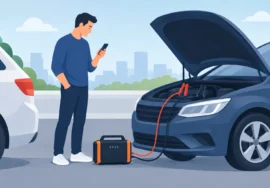
Many faults look similar from the driver’s seat, but the appropriate solution depends on the cause, the vehicle condition and where you are stranded. A flat battery may only need a jump start. If the battery no longer holds charge, mobile replacement can be a more dependable answer than repeated jump starts.
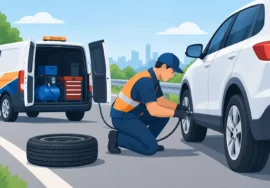
A flat tyre can sometimes be changed at the roadside, provided the vehicle is in a safe location and the wheel can be removed. Where locking wheel nuts are damaged, the tyre is badly shredded or traffic conditions make a roadside repair unsafe, recovery is usually the better choice. Continuing to drive on a damaged tyre can harm the wheel and affect vehicle control.
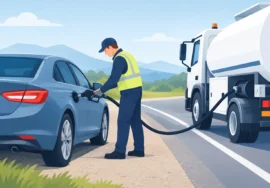
Running out of fuel is often resolved with a fuel delivery, allowing you to continue to a petrol station. Mechanical faults are less predictable. Overheating, oil-pressure warnings, brake problems, steering faults, smoke, burning smells and significant fluid leaks are all reasons to stop driving and arrange professional assistance. Trying to nurse a vehicle home can turn a manageable repair into major damage.
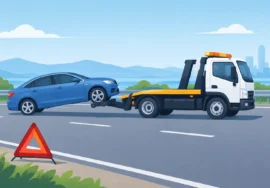
Recovery is also appropriate after an accident, when a vehicle is immobilised, or when it is stuck in mud, sand, a ditch or another off-road position. A proper pull-out requires the right equipment and a controlled approach. Improvised towing with ropes or another car can cause injury, damage recovery points or make an unstable situation worse.
Give clear details when you request help
A fast response begins with accurate information. When requesting assistance, explain your location as precisely as possible. A postcode, road name, motorway direction, junction number, nearby landmark or what3words location can all help identify where you are. On a motorway, note the carriageway direction, the nearest marker post and whether the vehicle is in an emergency area, on the hard shoulder or in a live lane.
You should also describe the vehicle, including its registration, make, model and condition. Let the recovery provider know whether the wheels turn freely, whether the steering is locked, whether the vehicle has been involved in an accident and whether it is in a difficult position. These details determine the equipment and type of recovery vehicle required.
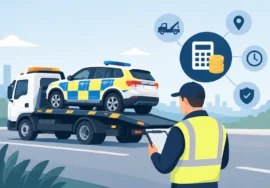
Be clear about what you need. You may only require a jump start, wheel change, puncture assistance or fuel delivery. If the vehicle cannot continue, provide the intended drop-off address as well as the collection point. This allows for a clear quote and helps avoid delays after the operator arrives.
At EK Vehicle Recovery, the aim is to resolve straightforward faults at the roadside where it is safe to do so, then provide careful onward transport when recovery is necessary. That approach can save time, reduce disruption and avoid moving a vehicle unnecessarily.
What professional recovery should look like
A reliable recovery service should communicate clearly from the start. You should know the likely service required, the information needed to price the job and what will happen when the operator arrives. If an issue becomes more complex on inspection, the reason for any change should be explained before work goes ahead.
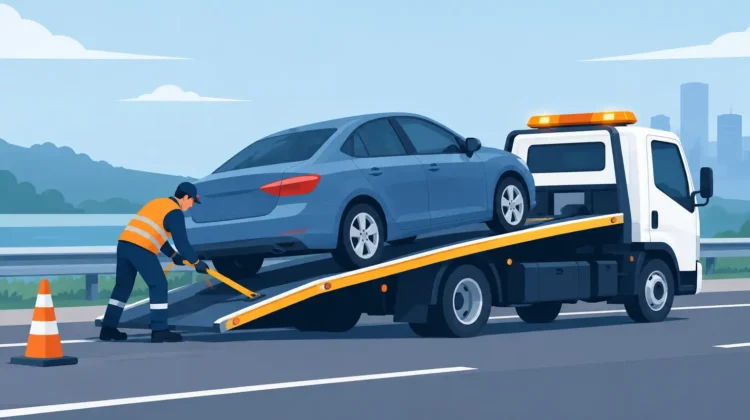
Professional handling matters, particularly with modern vehicles. Low-clearance cars, electric vehicles, automatic gearboxes and vehicles with accident damage may require a flatbed or specialist loading method rather than a simple tow. The operator should assess the vehicle before attaching equipment, use suitable recovery points and secure it properly for transport.
There is a trade-off between the fastest apparent solution and the safest long-term one. A short tow may sound convenient, but it may not be suitable for every vehicle or fault. Similarly, a roadside repair can be sensible for a simple battery or tyre issue, but not when the vehicle has a serious mechanical defect. A responsible operator will prioritise safe handling over a rushed fix.
You should remove valuables and keep important personal items, medication and documents with you before the vehicle is loaded. If the car is being taken to a garage, confirm the destination, opening hours and any instructions for leaving the keys. For an auction collection or pre-booked transport, make sure collection access, keys and vehicle paperwork are arranged in advance.
Avoid common mistakes while waiting
The minutes before help arrives are often when drivers take unnecessary risks. Do not work beneath a vehicle supported only by a jack. Do not try to change a wheel beside fast-moving traffic. Do not open a hot radiator cap, and do not keep restarting a vehicle that is smoking, overheating or showing a serious warning light.
It is also wise not to accept unverified assistance from someone who appears unexpectedly. If you have arranged recovery, ask for confirmation of the provider and vehicle details where available. Stay aware of your surroundings, keep your mobile phone charged if possible and let a friend or family member know where you are, especially if you are waiting in an isolated place.
If conditions are poor, such as heavy rain, darkness, ice or high winds, allow extra time and avoid standing outside unless it is clearly safer than remaining in the vehicle. Recovery work is affected by traffic, access and weather, but clear communication helps you understand what to expect.
Preparing for a breakdown before it happens
No driver can prevent every fault, but a few checks reduce the chance of being stranded. Keep tyres inflated to the recommended pressure, check fluids at sensible intervals and pay attention to warning lights rather than putting them off. If your battery is ageing or the engine is slow to start, arrange a check before winter or a long journey.
Carry a charged mobile phone, a charging cable, a warm layer, drinking water and any essential medication. If you use locking wheel nuts, make sure the locking key is in the vehicle and that you know where it is. For longer trips, particularly with children or on unfamiliar routes, these small preparations can make a difficult wait much more manageable.
A breakdown is frustrating, but it does not need to become a dangerous or confusing experience. Stop safely, share accurate details and choose roadside assistance or recovery based on what the vehicle actually needs. Calm decisions at the roadside give you the best chance of getting home, reaching a garage or continuing your journey safely.