How an Emergency Vehicle Recovery Quote Is Priced
A breakdown rarely happens at a convenient time. You may be stopped on a busy motorway, outside work with a flat battery, or facing a vehicle that will not move after an accident. In that moment, an emergency vehicle recovery quote should give you a clear route forward: what help is needed, how quickly it can be arranged, and what the recovery is likely to cost.
The most accurate quote is based on the real situation rather than a guess. A straightforward tow from a safe car park is different from recovering a damaged car from a live carriageway, pulling a vehicle out of mud, or collecting a non-runner with locked wheels. Sharing the right details from the start helps the recovery operator send suitable equipment and avoid delays when you need help most.
What affects an emergency vehicle recovery quote?
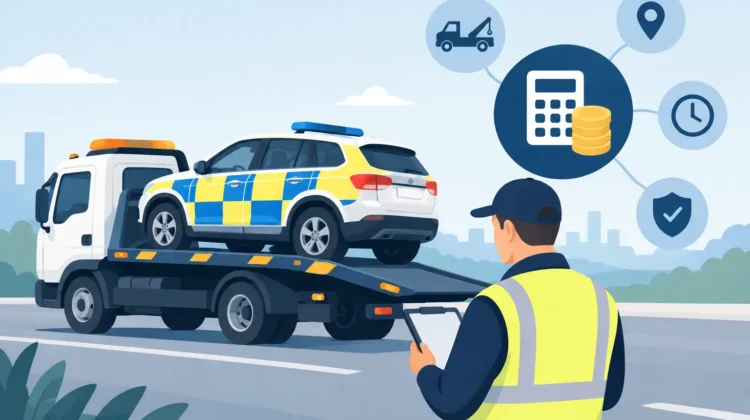
Recovery pricing is not simply a matter of miles between two postcodes. Distance matters, but so do access, safety requirements, the condition of the vehicle and the type of assistance required. A clear quote should take these factors into account before a recovery vehicle is dispatched.
Your collection and destination locations
The operator needs the exact collection point and where the vehicle needs to go. A postcode is useful, but roadside landmarks, motorway junction numbers, service areas or nearby villages can be just as important. If you are on a motorway or dual carriageway, provide the carriageway direction, the nearest marker post if you can see one, and whether you are on the hard shoulder or at a safe refuge area.
The destination also affects the job. Transporting a car to your home, a local garage, a main dealer or an auction site may involve different travel distances and access arrangements. If the vehicle is being taken to a garage outside its opening hours, check whether it can be left safely and whether keys can be handed over.
Vehicle type, size and condition
Most cars can be recovered using standard equipment, but the recovery method must suit the vehicle. Tell the operator the make, model and registration where possible, particularly if it is an electric or hybrid vehicle, a low-suspension car, a 4×4, a van or a vehicle with modifications.
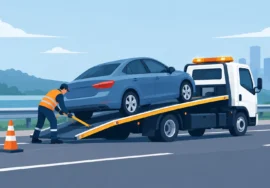
Its condition is equally important. Is it drivable but unsafe to continue? Does it start? Are the wheels turning freely? Has it suffered accident damage, a broken steering component or a puncture? A car with damaged wheels or a locked transmission may need different loading equipment from one that can roll onto a recovery lorry. Honest information protects your vehicle and helps prevent an unsuitable vehicle arriving on site.
The service you need
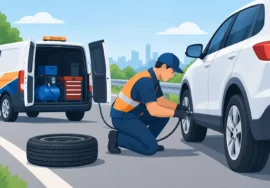
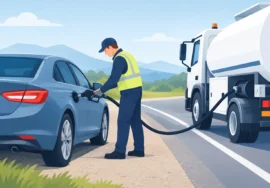
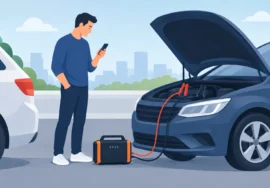
Not every call-out requires a tow. Sometimes the fastest and most cost-effective answer is roadside assistance that gets you moving again. A flat battery may be resolved with a jump start or mobile battery replacement. A spare wheel may be fitted, a puncture assessed, or enough fuel delivered to get you safely to the next filling station.
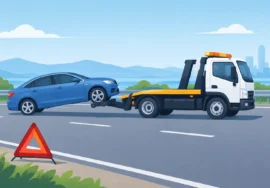
If the problem cannot be resolved safely at the roadside, recovery is the sensible next step. A professional operator will assess whether an on-site repair is appropriate or whether transport is safer for you and your vehicle. This is especially relevant after an accident, where damage may not be obvious even if the engine still runs.
Time, access and recovery difficulty
Emergency assistance is available around the clock, but conditions can influence the work involved. Recovering a vehicle from a well-lit supermarket car park is generally more straightforward than attending a narrow country lane, an underground car park, a muddy field or a busy road at night.
Off-road pull-outs, flood-affected ground and vehicles stuck in sand or mud can require specialist winching, careful positioning and a full assessment of the ground conditions. The goal is not to rush a pull that risks further damage. It is to recover the vehicle carefully, protect those nearby and get it to a safe location.
Details to provide when requesting a quote
You do not need mechanical expertise to request help. The key is to describe what you can see and what happened before the vehicle stopped. If you are unsure, say so. A good recovery team can ask the practical questions needed to establish the likely service.
When requesting an emergency vehicle recovery quote, have your collection location, destination, vehicle registration, make and model ready. Explain whether the car starts, whether it can roll, what warning lights are showing and whether there has been a collision. Mention any flat tyres, missing wheels, key issues, low ground clearance or access restrictions at either end of the journey.
Photos can also be useful when it is safe to take them. For accident damage, a vehicle stuck off-road or an awkward parking position, images help an operator understand the situation before arrival. Never stand in a live lane, cross a carriageway or put yourself at risk to take a photograph.
Safety comes before the recovery
If your vehicle has broken down in a dangerous position, your first priority is getting yourself and your passengers to safety. Switch on your hazard warning lights. If it is safe to leave the vehicle, move away from traffic and stand behind a barrier where one is available. Do not attempt roadside repairs on a motorway or in any location where passing traffic puts you at risk.
If there are injuries, an immediate danger to road users, fire, or the vehicle is obstructing traffic in a hazardous way, contact the emergency services first. Once the situation is safe, recovery can be arranged.
On a smart motorway, follow the instructions on signs and use an emergency refuge area if you can reach one safely. If you cannot, remain alert, follow official guidance and give your location as accurately as possible. A recovery operator can plan the safest collection method when they know exactly where you are.
Why the cheapest figure is not always the best choice
When you are stressed and stranded, it is understandable to focus on the lowest price. But a very low figure can leave important questions unanswered. Does it include the collection, loading and transport? Is the price based on the actual destination? Can the provider handle a non-runner or accident-damaged vehicle? Will there be extra charges if the vehicle cannot be moved as expected?
The right service is one that gives clear information, asks sensible questions and uses suitable equipment. Careful loading matters, especially for vehicles with damaged tyres, automatic gearboxes, electric drivetrains or bodywork damage. A responsible recovery service should be clear about what is included and explain if new information on site changes what is required.
For pre-booked transport, such as an auction collection or moving a vehicle to a garage, you may have more flexibility over timing. That can make planning easier. For a live breakdown, however, safe attendance and the right equipment should take priority over trying to make a complex recovery fit a basic transport quote.
What happens after you accept the quote?
Once the booking is confirmed, keep your phone available and make sure the recovery team can contact you if they need more precise directions. If your location changes, for example after moving to a safer position, let them know immediately.
Before the vehicle is loaded, remove valuables where possible and take any essential belongings with you. Tell the operator about anything unusual, such as a loose bumper, a key that will not turn, a parking brake fault or an alarm issue. If the vehicle is being delivered without you, confirm the drop-off instructions and make sure the receiving garage or location is expecting it.
EK Vehicle Recovery provides 24/7 roadside assistance and recovery for motorists who need a practical, safety-first response. Whether the solution is a jump start, wheel change, fuel delivery, vehicle pull-out or secure transport, the aim is to reduce the disruption and handle your vehicle with care.
A clear quote starts with accurate details, but you do not need to have every answer before asking for help. Tell the recovery team where you are, what has happened and where you need to go. From there, the right plan can be made to get you, your passengers and your vehicle to safety.