Mobile Puncture Repair: Safe Roadside Help
A flat tyre rarely happens at a convenient time. It may be on the school run, during a late journey home, on a busy motorway or outside your workplace when you simply need to be somewhere else. Mobile puncture repair brings practical roadside help to your location, so the problem can be assessed without the added risk of driving on a damaged tyre.
The right response depends on where you are, how badly the tyre is damaged and whether a safe repair is possible. Sometimes the answer is a straightforward on-site repair or wheel change. At other times, the safest option is recovery to a tyre centre or another suitable destination. Knowing the difference helps you make a calm decision when time is tight.
What to do when you realise you have a puncture
If the vehicle starts pulling to one side, the steering feels unusually heavy, or you hear a repeated flapping sound, reduce speed gradually. Avoid sharp braking or sudden steering inputs. Find a safe place to stop as soon as you can, ideally away from moving traffic and on firm, level ground.
Switch on your hazard warning lights. If you are on a motorway or a high-speed road, do not attempt to inspect or change the wheel beside live traffic. Move behind a safety barrier if it is safe to do so, keep well away from the carriageway and arrange professional assistance. Your safety matters more than saving a few minutes.
Once parked safely, check the tyre only if you can do so without putting yourself at risk. A visibly deflated tyre, a screw or nail in the tread, sidewall damage, or a split in the rubber all require attention. Do not remove an object lodged in the tyre. It may be slowing the air loss, and removing it can leave you completely stranded.
It is also worth checking whether your car has a usable spare wheel, a tyre inflation kit or neither. Many newer vehicles are supplied without a spare, which can turn an otherwise minor puncture into a recovery requirement.
When mobile puncture repair is possible
A professional mobile puncture repair can be a convenient solution when the damage is limited and the tyre remains suitable for repair. In most cases, repairable punctures are small holes in the central tread area caused by objects such as nails or screws. The tyre must also have enough legal, safe tread depth and no signs of structural damage.
An experienced operator will inspect the tyre before recommending a repair. They will consider the puncture location, size and condition of the tyre, as well as whether it has been driven while flat. This assessment is not a formality. Driving even a short distance on a flat tyre can damage the internal structure, making repair unsafe even when the outside of the tyre appears intact.
If a repair is suitable, the aim is to restore the tyre safely and get you moving again with minimal disruption. The wheel may need to be removed for a proper inspection, and the tyre must be reinflated to the correct pressure before the vehicle is released. A quick fix is only useful if it is also safe.
Damage that usually needs more than a repair
Not every puncture can or should be repaired at the roadside. Damage to the sidewall or shoulder of the tyre is generally more serious because these areas flex heavily while driving. Cuts, bulges, cracking, exposed cords and damage caused by running flat are all warning signs that replacement is likely to be needed.
A puncture that is too large, multiple punctures close together, or a tyre worn below the legal tread limit may also rule out repair. The same applies if the wheel itself is bent, cracked or badly damaged. In these situations, fitting a serviceable spare wheel may be possible. If there is no safe spare, recovery avoids the risk of further damage to the vehicle or danger on the road.
Run-flat tyres need particular care. They are designed to travel a limited distance after losing pressure, but they still have manufacturer limits and may not be repairable after use while deflated. Do not assume a run-flat tyre is safe to continue driving on without checking the vehicle guidance and having it inspected.
Why driving on a flat tyre is a costly gamble
It can be tempting to drive slowly to a nearby garage. In practice, this often turns a repairable puncture into a replacement tyre, and sometimes a damaged wheel as well. A deflated tyre cannot support the vehicle properly. Its sidewalls become crushed between the wheel rim and the road surface, creating heat and internal damage that may not be visible from the outside.
Continuing can affect braking, steering and stability, particularly in wet weather or when carrying passengers and luggage. It also increases the chance of losing control if the tyre fails completely. If the tyre is flat, stop safely and arrange help rather than trying to nurse the car along.
The exception is only where your vehicle manufacturer specifically permits limited travel on a run-flat tyre, and you can do so without compromising safety. Even then, reduced speed and distance limits apply, and the tyre should be checked promptly.
What roadside assistance can do for a tyre problem
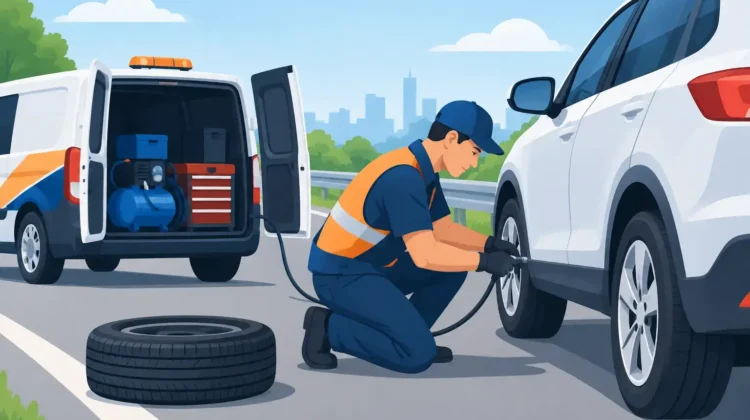
Tyre issues are not all the same, so roadside support should begin with an assessment rather than a promise that every tyre can be repaired. A capable mobile service can inspect the damage, check whether the spare is roadworthy, remove difficult wheel nuts using suitable equipment and fit the spare where it is safe to do so.
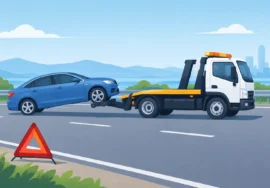
If an on-site solution is not possible, recovery is the sensible next step. This may mean transporting the vehicle to a tyre specialist, your home, a garage or another location you choose. It removes the uncertainty of attempting to drive on an unsafe wheel and lets the problem be dealt with properly.
EK Vehicle Recovery provides 24/7 roadside assistance for tyre problems, including wheel changes, puncture support and safe vehicle recovery when a journey cannot continue. Clear information about your location, vehicle type, tyre condition and whether you have a spare helps the right assistance be arranged without delay.
Make the call-out quicker and safer
When requesting assistance, give your exact location where possible. A road name, motorway junction, nearby landmark or postcode can help an operator find you quickly. Explain whether the tyre is fully flat, whether you can see an object in it, and whether you have stopped in a safe place.
Mention any relevant vehicle details, particularly if you have locking wheel nuts. The locking wheel nut key is often stored with the spare wheel, in the glovebox or under the boot floor. If it is missing, say so at the start. It may affect what can be done at the roadside.
If you are travelling with children, vulnerable passengers or pets, make this clear too. The immediate priority is always to keep everyone safe while the vehicle is assessed or recovered.
Reducing the chance of another puncture
Not every puncture is avoidable, but routine checks make tyre problems less likely to catch you out. Check tyre pressures at least once a month and before long journeys, using the pressure recommended for your vehicle and load. Under-inflated tyres run hotter and are more vulnerable to damage, while over-inflation can reduce grip and affect wear.
Look over the tread and sidewalls regularly, especially after driving through potholes, roadworks or poorly surfaced lanes. Remove small stones caught in the tread if they are loose, but leave embedded screws or nails alone until the tyre can be inspected. Check that your spare, if fitted, is inflated and that the tools needed to change a wheel are present.
A puncture is stressful, but it does not need to become a dangerous roadside situation. Stop safely, avoid driving on the flat tyre and let a proper assessment decide whether repair, a wheel change or recovery is the right next move.