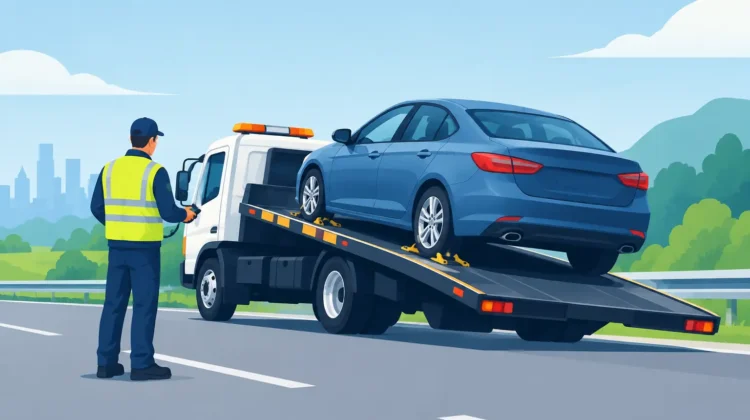
Vehicle Recovery When You Need Help Fast
A warning light on a dark motorway, a car that will not start outside work, or a tyre failure on the school run can turn an ordinary journey into a stressful stop. Vehicle recovery is there to make that moment safer and simpler: first protect the people at the roadside, then assess whether the vehicle can be fixed on site or needs careful transport.
The right response depends on where you are, what has happened and the condition of the vehicle. A flat battery may be resolved with a jump start. A damaged wheel, overheating engine or collision-damaged car may need professional recovery instead. Acting calmly and choosing the correct support helps prevent a difficult situation from becoming more serious.
Put safety first when your vehicle stops
If your vehicle develops a fault, pull over somewhere safe as soon as it is possible to do so. On a normal road, aim for a firm, visible place away from moving traffic. Switch on the hazard lights, apply the handbrake and, if it is safe, leave the vehicle from the side away from traffic.
Motorways and high-speed dual carriageways require extra caution. If you can reach a service area or leave at the next junction without putting yourself at risk, do so. If you stop on the hard shoulder or in an emergency refuge area, keep well away from live traffic. Follow the official motorway emergency guidance and contact the appropriate emergency services where there is immediate danger, injuries or an obstruction to the road.
Do not attempt roadside repairs if you are exposed to passing traffic, the ground is unstable, visibility is poor or you are unsure what is wrong. Opening the bonnet or changing a wheel may seem like the fastest answer, but safety must come before getting moving again.
When roadside assistance may be enough
Not every breakdown requires a recovery lorry. Many common problems can be dealt with at your location, allowing you to continue the journey without the inconvenience of transport to a garage.
A flat battery is a good example. If the battery has simply discharged because lights were left on, a professional jump start may get the engine running. However, if the battery is old, repeatedly losing charge or physically damaged, a mobile battery replacement is often the more dependable option. Continuing with a failing battery can leave you stranded again shortly afterwards.
Tyre problems also vary. A slow puncture may be repairable, while a shredded sidewall, damaged alloy or locking wheel nut issue may mean the wheel needs changing or the vehicle needs transporting. It is worth remembering that many newer cars do not carry a spare wheel, and tyre sealant is not suitable for every puncture.
Running out of fuel is another issue that can usually be resolved quickly with fuel delivery. Avoid repeatedly trying to start the engine if you suspect the tank is empty, particularly in diesel vehicles. The correct next step can depend on the vehicle and how long it has been run without fuel.
When vehicle recovery is the safer choice
Vehicle recovery is the right option when driving onwards could cause damage, create danger or simply is not possible. This includes mechanical failure, non-starting faults that cannot be resolved roadside, accident damage, a broken suspension component, severe overheating and electrical problems.
After a collision, a car may look driveable but still be unsafe. Loose bodywork, fluid leaks, wheel misalignment, damaged lights or a compromised steering system are all reasons to avoid taking chances. A trained recovery operator can load and secure the vehicle for transport to your home, a trusted garage, a body repairer or another agreed destination.
Recovery is also useful for planned jobs. You may have bought a non-running vehicle at auction, need to move a classic car, or need a vehicle collected from a garage. Pre-booked transport provides a practical way to move it without relying on temporary insurance, improvised towing or asking a friend to take on the risk.
Stuck vehicles need the right equipment
Mud, sand, snow and uneven ground can leave a vehicle immobilised even when nothing has mechanically failed. Spinning the wheels usually makes the situation worse by digging the tyres in further. Avoid standing behind or close to a vehicle while it is being pulled out, and never attach straps to unsuitable points.
A controlled pull-out using appropriate equipment is safer for both the vehicle and everyone nearby. The approach will depend on the ground conditions, access, vehicle weight and whether there is a safe recovery point available.
What to tell a recovery provider
Clear information helps the recovery team send the right vehicle, equipment and operator. You do not need to diagnose the fault, but the details you can provide will make arrangements quicker and reduce the chance of delays.
When requesting a quote, be ready with your collection location and intended drop-off point, along with the vehicle registration, make and model. Explain whether it is a breakdown, accident, flat battery, tyre issue, fuel shortage or off-road recovery. Mention if the car can roll, steer, select neutral or start, and flag access concerns such as a multistorey car park, narrow lane, locked wheel or missing keys.
If you are on a busy road, give a precise location where possible. Nearby landmarks, road numbers, direction of travel and junction numbers can all help. On a motorway, location marker posts and emergency refuge area numbers are particularly useful.
Be honest about the vehicle’s condition. A recovery operator needs to know if the wheels are damaged, the steering is locked, the car is lowered, the vehicle is electric or hybrid, or there are leaks. This is not about making the process more complicated. It allows the team to plan safe loading and secure transport from the outset.
Avoid improvised towing and risky fixes
It can be tempting to use a tow rope or accept help from another driver, especially if the destination seems close. In practice, improvised towing carries significant risks. The towing vehicle may not be suitable, the broken-down car may have reduced braking or steering assistance, and a rope can snap or leave little room to react in traffic.
The same applies to forcing a damaged wheel off, repeatedly jump starting a vehicle with an unknown fault, or driving after an impact because the engine still runs. These choices can cause further damage and turn a manageable repair into a larger bill.
Professional recovery provides the correct restraint systems and loading methods for the vehicle’s condition. It also gives you a clear plan for where the vehicle is going, rather than leaving you to solve the next problem at the roadside.
Choosing dependable recovery support
Speed matters when you are stranded, but it should not be the only consideration. Look for a provider that communicates clearly about availability, collection details, destination and pricing. A quote should reflect the distance, vehicle type, condition and any specialist requirements, rather than leaving you uncertain about unexpected charges.
You should also expect careful handling. Modern vehicles may have low bumpers, electronic parking brakes, automatic gearboxes and complex safety systems that need consideration during loading. Experienced operators use suitable recovery equipment and take the time to secure the vehicle properly.
EK Vehicle Recovery provides 24/7 support for both immediate roadside problems and planned transport. Where a straightforward issue can be resolved at the roadside, the aim is to get you moving again quickly. Where it cannot, the priority is safe, responsible recovery to the location you choose.
A breakdown rarely arrives at a convenient time. Keep your phone charged where possible, know your vehicle registration and save the details of a trusted recovery provider before you need one. If the unexpected happens, focus on getting yourself to safety first – the vehicle can then be handled properly.